
Liquid Waterproofing in Broadstairs
Get in TouchLiquid waterproofing uses a site-applied membrane to protect roofs and other suitable external surfaces from water ingress.
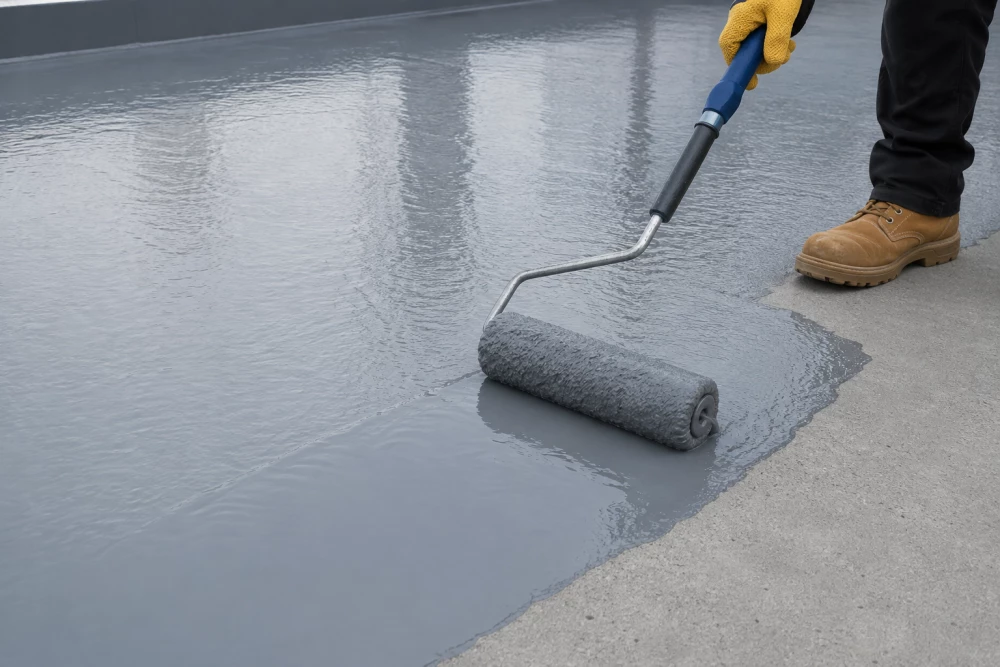
The waterproofing material is applied in liquid form before curing to create a continuous membrane that follows the shape of the substrate and surrounding details.
We install liquid waterproofing systems in Broadstairs for new-build and refurbishment projects, including flat roofs, commercial roofs, balconies and complex roof areas.
Get a Liquid Waterproofing Quote
Liquid Applied Waterproofing Broadstairs
Liquid applied waterproofing is a category containing several different membrane technologies rather than one individual product.
Depending on the application, systems can use technologies such as:
PMMA
Polyurethane
GRP
Polyurea
Polymer-modified bitumen
Other reinforced liquid membranes
Different systems have different substrate requirements, curing characteristics and approved applications.
The waterproofing specification should therefore start with the building and substrate before a particular membrane technology is selected.
How Liquid Waterproofing Works
Liquid waterproofing is applied directly to a prepared substrate.
Once cured, the material forms the waterproofing layer.
A typical system can follow:
Substrate → preparation → primer → liquid membrane → reinforcement → finished waterproofing
Not every system uses exactly the same build-up.
Some membranes are reinforced throughout, while others have different requirements for primers, carriers, additional coats and protective finishes.
The installation should follow the specification for the selected waterproofing system.
Seamless Waterproofing Membranes
Because the waterproofing is formed on site, liquid systems can create a continuous membrane across the treated surface.
This is particularly useful when the waterproofing needs to transition between horizontal and vertical details.
Applications can include:
Main roof areas
Upstands
Parapets
Rooflights
Outlets
Gutters
Pipe penetrations
Plant supports
Door thresholds
Changes in level
These details can be incorporated into the wider membrane rather than approached as isolated areas.
Flat Roof Waterproofing Broadstairs
Flat roofs are a major application for liquid waterproofing.
The membrane can be installed across the main roof area and continued around its associated details.
Liquid systems can form part of new warm, cold or inverted roof specifications where the particular product is approved for that construction.
They can also be used for refurbishment of existing roofs.
The complete roof still needs to consider insulation, vapour control, drainage and substrate requirements in addition to the waterproof membrane.
Waterproofing Existing Roofs
An ageing roof does not automatically need to be stripped back and completely replaced.
Liquid waterproofing can be particularly useful for refurbishment because suitable systems can be installed as overlays over existing waterproofing.
Whether this is appropriate depends on the condition and construction of the existing roof.
Before an overlay is specified, the roof should be assessed for:
Existing waterproofing type
Moisture
Adhesion
Surface deterioration
Defective areas
Roof falls
Drainage
Existing insulation
Penetrations and details
Wet or unsuitable materials should not simply be concealed beneath another waterproofing layer.
Liquid Waterproofing Overlay Systems
Where the existing roof is suitable, an overlay can create a new waterproof membrane while retaining compatible parts of the existing construction.
This can reduce the amount of roof material that needs to be removed during refurbishment.
Liquid systems may be available for substrates such as existing bituminous membranes, asphalt, concrete, metal, GRP and other roof coverings.
Compatibility varies considerably between products.
The substrate and proposed waterproofing system should therefore be checked together before an overlay is specified.
Waterproofing Complex Roof Details Broadstairs
Complex details are one of the areas where liquid application can be particularly useful.
Commercial roofs can contain multiple pieces of plant, pipes, ducts, rooflights and outlets within a relatively small area.
A liquid membrane can be formed around these shapes.
The waterproofing can transition through:
Roof → upstand
Roof → rooflight
Roof → pipe penetration
Roof → outlet
Roof → plant support
Maintaining continuity through these interfaces is an important part of the complete waterproofing installation.
Waterproofing Around Roof Plant
Heating, ventilation, air-conditioning and other building services can create numerous interfaces through a commercial roof.
Some plant may be impossible or impractical to remove during refurbishment.
Liquid waterproofing can be considered where a suitable membrane needs to be installed around existing supports and penetrations.
The condition of the plant interfaces should be assessed alongside the surrounding roof rather than simply applying material around an unidentified source of water ingress.
Balcony Waterproofing Broadstairs
Liquid applied membranes can also be used within suitable balcony waterproofing systems.
Balconies have different requirements from roofs with limited maintenance access because the finished construction may experience regular pedestrian traffic.
Systems intended for balconies can incorporate waterproofing with appropriate wearing or protective finishes.
Important details can include:
Door thresholds
Wall junctions
Outlets
Balustrade interfaces
Upstands
Changes in level
The selected liquid system should be approved for the intended balcony application.
Get a Liquid Waterproofing Quote
Walkway and Terrace Waterproofing
Walkways and roof terraces can also require waterproofing beneath areas intended for pedestrian access.
The complete build-up needs to consider both water ingress and the way the finished surface will be used.
Some liquid systems are specifically designed for trafficable applications and can incorporate appropriate wearing layers.
A standard roof membrane should not automatically be assumed suitable for regular pedestrian traffic.
PMMA Waterproofing
PMMA is one technology used within liquid waterproofing.
These systems use reactive methacrylate resins and are known for rapid curing characteristics.
PMMA can be particularly useful where short intervals between application stages are beneficial or where detailed waterproofing is required.
Reinforced PMMA systems can be specified for roofs, balconies and other applications where approved by the manufacturer.
Polyurethane Liquid Waterproofing
Polyurethane is another established liquid membrane technology.
Different polyurethane systems are available, including reinforced products used for new and existing roofs.
Their characteristics vary according to formulation.
Substrate compatibility, reinforcement, primers, application conditions and curing requirements should therefore be established for the individual product being specified.
GRP Waterproofing
GRP combines polyester resin with glass-fibre reinforcement to create a rigid reinforced laminate.
It is widely associated with flat roofing but sits within the broader family of site-applied liquid waterproofing technologies.
GRP systems have their own substrate and installation requirements and should not be treated as interchangeable with PMMA or polyurethane membranes.
The appropriate technology depends on the project.
Waterproofing Concrete Surfaces Broadstairs
Concrete can provide a substrate for certain liquid waterproofing systems.
Its condition needs to be established before installation.
Cracks, surface contamination and moisture can all influence preparation.
The concrete may require mechanical preparation, repairs and an appropriate primer before the waterproofing membrane is applied.
Product-specific requirements should determine the final preparation method.
Liquid Waterproofing for Metal Roofs
Suitable liquid systems can also be used for metal roof refurbishment.
Metal roofs can develop water ingress around:
Sheet laps
Fixings
Penetrations
Gutters
Rooflights
Changes in profile
Corrosion and the condition of the existing coating should be assessed before waterproofing.
Movement within the metal construction also needs to be considered when selecting the proposed membrane and detailing method.
Liquid Waterproofing Over Felt
Existing bituminous roofing membranes are another potential substrate for liquid waterproofing.
Compatible systems can be used to overlay suitable felt roofs and form a continuous new membrane.
The existing roof needs to be inspected first.
Loose material, defects and areas containing trapped moisture may require additional work before the waterproofing system is installed.
The required primer and preparation depend on the existing material and proposed liquid membrane.
Waterproofing Roof Outlets and Gutters
Waterproofing and drainage need to work together.
Outlets and gutters collect water from the roof and direct it into the drainage system.
Liquid membranes can be detailed into these areas to maintain continuity between the main roof surface and drainage point.
Blocked or inadequately designed drainage cannot be corrected simply by installing a new waterproof membrane.
Persistent ponding should therefore be investigated as part of the roof assessment.
Liquid Waterproofing for Roof Refurbishment Broadstairs
Roof refurbishment often involves more than applying another layer over the existing surface.
A typical liquid waterproofing project can involve:
Inspecting the existing roof
Identifying the existing waterproofing
Assessing moisture and substrate condition
Locating defects
Cleaning and preparing the roof
Completing required repairs
Applying primers where specified
Reinforcing details
Installing the main liquid membrane
Completing the specified finish
The exact sequence depends on the roof and selected waterproofing technology.
Cold-Applied Waterproofing
Many liquid waterproofing systems are cold applied.
This allows installation without the flame-based application associated with some traditional roofing methods.
Cold application can be particularly useful when working around complex roof details or on projects where avoiding hot works is an important consideration.
Cold applied does not mean that installation conditions can be ignored.
Temperature, rain, moisture and humidity can still affect individual systems and should remain within the manufacturer's application requirements.
Liquid Waterproofing for Commercial Buildings
Commercial buildings can contain extensive roof areas with numerous services and penetrations.
Liquid membranes can be considered for offices, retail buildings, schools, healthcare facilities, leisure buildings and other commercial properties.
The building type alone does not determine the waterproofing specification.
The existing roof construction, substrate, details and intended use provide the more important technical information.
Request a Liquid Waterproofing Quote
New-Build Liquid Waterproofing
Liquid waterproofing can also form part of a new roof specification.
Rather than overlaying an existing membrane, the liquid system becomes part of a complete new roof build-up.
This can involve:
Structural deck → vapour control → insulation → waterproofing → finish
The actual arrangement depends on the roof design.
The waterproofing system should therefore be specified alongside the other roof components rather than added independently after the wider roof has been designed.
Choosing a Liquid Waterproofing System
There is no single liquid membrane suitable for every waterproofing project.
Selection should consider:
Substrate
Existing waterproofing
New-build or refurbishment
Roof construction
Moisture
Roof falls and drainage
Required access
Complex details
Application conditions
Reinforcement
Expected movement
Required finish
Third-party certification
The intended application should fall within the scope of the selected system's current certification and manufacturer guidance.
Liquid Waterproofing Contractors Broadstairs
We install liquid waterproofing systems throughout Broadstairs for flat roofs, commercial and industrial properties, balconies and suitable refurbishment projects.
Work can include new waterproofing, roof overlays, substrate preparation and detailed membrane installation around rooflights, outlets, upstands and penetrations.
Send us photographs of the existing surface, the approximate area and details of the current roof or waterproofing system. This helps establish the likely project requirements and which type of liquid membrane may be appropriate.
We cover Broadstairs (Kent)